
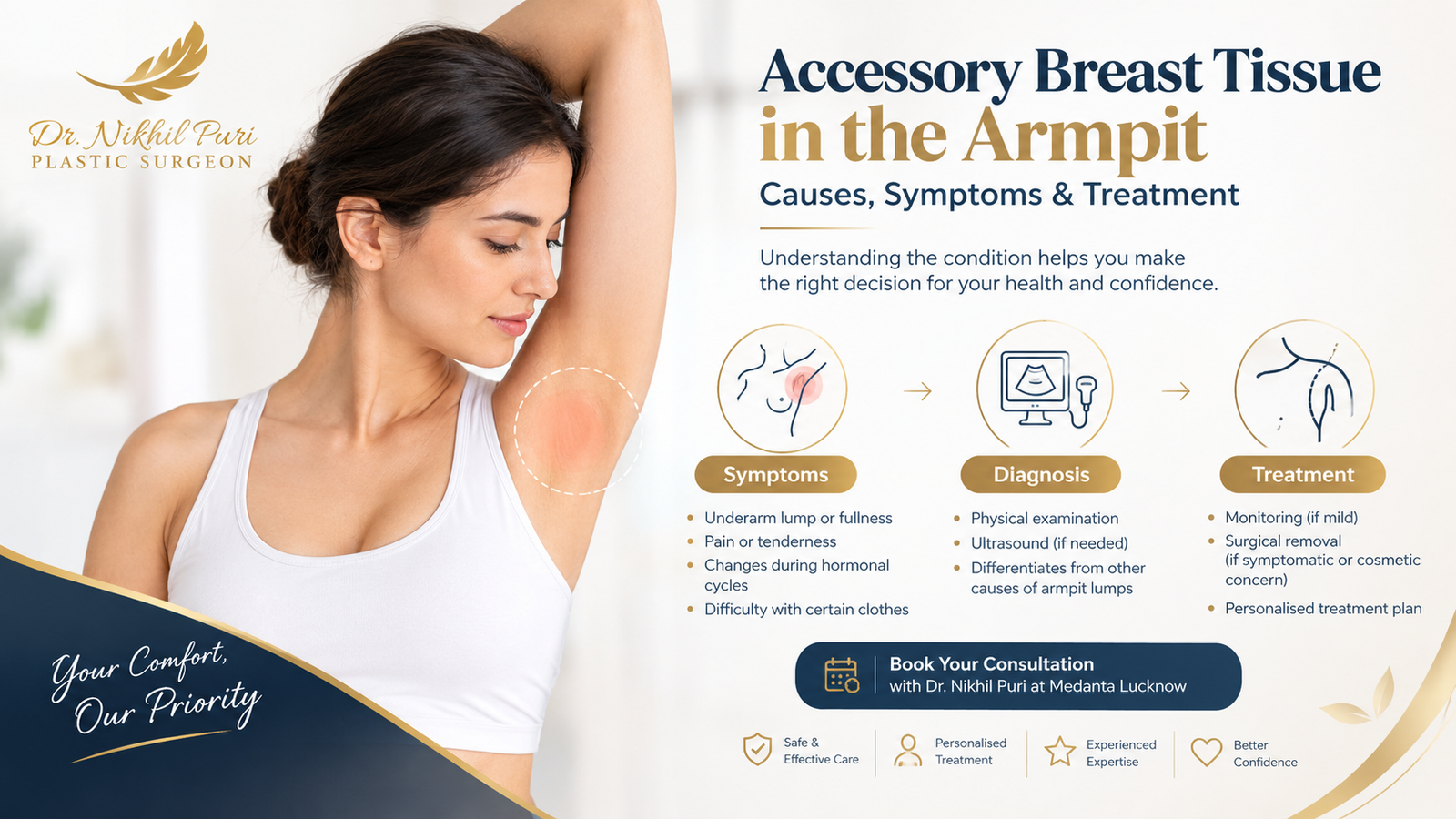
You may have noticed a soft fullness under your arm that seems to swell before your period, grows during pregnancy, or never quite goes away even when you lose weight. Most people assume it’s just fat. Sometimes it isn’t. It can be accessory breast tissue, also known as axillary breast tissue.
It’s usually harmless, but that doesn’t make it easy to live with. It can be tender, it can show in sleeveless or fitted clothes, and for many people it chips away at their confidence. If you’re searching for accessory breast tissue treatment in Lucknow, it helps to first understand what this tissue is and what can be done about it.
What Is Accessory Breast Tissue?
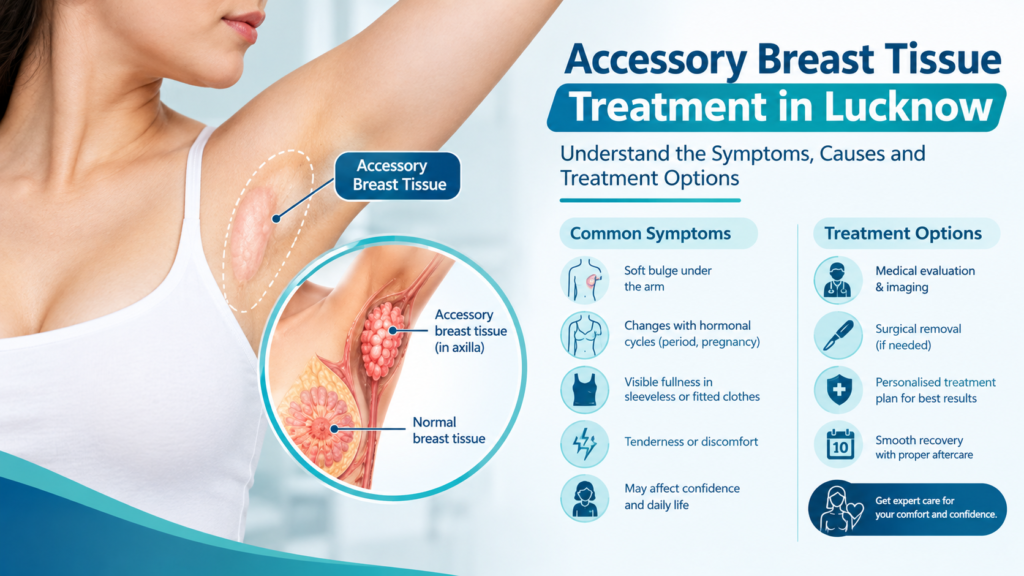
Accessory breast tissue is extra breast tissue that grows outside the normal breast area, most often in the armpit.
The reason goes back to before birth. During development, breast tissue can form along a line on the body called the milk line. In most people, the tissue outside the breast disappears. In some, a little of it stays and only becomes noticeable years later.
How much tissue there is differs a lot from person to person. One person may have a small patch, another a clear bulge. It can affect both women and men, though women notice it more often.
What Does It Look and Feel Like?
There’s no single picture. Common descriptions include:
- A soft bulge under the arm
- General fullness in the armpit
- A lump that changes with your menstrual cycle
- Extra tissue that stretches toward the upper arm
- Swelling that shows when you wear sleeveless clothes
Some people also feel tenderness or a dull ache.
An important point: not every lump in the armpit is accessory breast tissue. Enlarged lymph nodes, cysts and lipomas can look similar. That’s why it’s best to have it examined before deciding what to do.
Why It Becomes More Noticeable at Certain Times
This tissue can sit quietly for years. Then something changes, and suddenly it’s obvious. Hormonal shifts are the usual trigger, such as:
- Puberty
- Menstruation
- Pregnancy
- Breastfeeding
- Weight changes and other hormonal changes
During these phases the tissue can swell or turn tender, which is often when people first spot it.
What Problems Can It Cause?
Plenty of people have accessory breast tissue and never need to do anything about it. For others, it becomes a daily nuisance.
Pain or tenderness. Hormonal changes can make the area sore, especially around periods.
Visible fullness. The bulge can show under fitted tops, blouses or sleeveless wear.
Trouble with clothes. Some people avoid certain outfits altogether because of how the area looks.
Irritation. Skin folds in the underarm can rub, sweat and become sore.
Self-consciousness. Uneven fullness under the arm can take a toll on body confidence.
If the area is painful, changing quickly, or comes with any other worrying symptom, get it checked.
Does It Always Need Treatment?
No. If the tissue is small, painless, and doesn’t bother you, your doctor may suggest simply keeping an eye on it.
Treatment starts to make sense when the tissue:
- Causes ongoing discomfort
- Becomes painful with hormonal changes
- Creates noticeable underarm fullness
- Leads to repeated skin irritation
- Gets in the way of clothing or movement
- Keeps bothering you cosmetically
- Has grown or changed in appearance
The right approach depends on how much tissue is there and what it is made of.
How Is It Diagnosed?
It usually starts with a conversation and a physical examination. Your doctor will ask about your symptoms and look at and feel the area.
Depending on what they find, an ultrasound may be suggested to see the tissue more clearly. If the lump looks unusual or the diagnosis is uncertain, further tests may follow. The aim is to tell accessory breast tissue apart from other causes of an underarm lump and decide what to do next.
Accessory Axillary Breast Removal: What Does Surgery Involve?
When the tissue causes significant symptoms or distress, surgery can be considered. The technique depends on how much tissue there is and what it consists of.
In suitable cases, the surgeon removes the extra glandular or fatty tissue through a carefully planned approach. The goal is to reduce the fullness while keeping the natural shape of the underarm.
Here is how the process generally goes:
- Consultation: The surgeon examines the area and goes through your symptoms and medical history.
- Assessment: Imaging is advised if needed.
- Planning: The approach is chosen based on the tissue and the result you want.
- Procedure: The unwanted tissue is removed using the planned technique.
- Recovery: Aftercare helps the area heal well while the final contour settles.
Is It the Same as Liposuction?
Not always. Accessory breast tissue can be glandular, fatty, or a mix of the two. Liposuction removes fat, so on its own it may not deal with the glandular part.
That’s why the first step is working out what type of tissue you have. Assuming every underarm bulge is just fat can lead to the wrong treatment.
What Is Recovery Like?
Recovery depends on how extensive the treatment was and which technique was used. Your surgeon will usually ask you to:
- Keep the area clean and protected
- Avoid strenuous arm movements at first
- Follow the dressing instructions
- Take medication as prescribed
- Come in for follow-up visits
- Return to normal activities gradually
Some swelling, bruising and tenderness is normal for a while. The final result takes time to appear as the tissue heals.
Can It Come Back?
Proper removal can give a lasting correction, though results vary from person to person. Weight changes and hormones can affect the surrounding tissue. Following your surgeon’s aftercare advice and keeping your weight stable and healthy will help protect the result.
When Should You See a Doctor About an Armpit Lump?
Any new, lasting, painful, fast-growing or unusual lump in the armpit should be checked. Don’t assume it’s accessory breast tissue.
See a doctor soon if you notice:
- A lump that is growing quickly
- Pain that doesn’t go away
- Changes in the skin
- Nipple-like discharge from the area
- A hard or fixed lump
- Swelling that doesn’t settle
- Changes in the breast itself
Getting it looked at early makes it easier to find the cause and decide whether further tests are needed.
Accessory Breast Tissue Treatment in Lucknow
Accessory breast tissue is more than a cosmetic issue when it hurts, irritates the skin or never lets you forget it’s there. The good news is that treatment can be fitted to your anatomy, your symptoms and your expectations.
Dr. Nikhil Puri, Director – Plastic, Aesthetic and Reconstructive Surgery at Medanta Lucknow, offers personalised evaluation and surgical treatment for patients with excess or accessory breast tissue. A consultation can confirm whether your underarm fullness is accessory breast tissue and whether treatment is right for you.
Frequently Asked Questions
Is accessory breast tissue harmful?
In most cases it is benign. Still, any new or changing breast or underarm lump should be checked by a qualified doctor.
Can it become painful?
Yes. Hormonal changes around menstruation, pregnancy or breastfeeding can make it swollen or tender.
Can exercise get rid of it?
Exercise improves fitness and reduces body fat, but it can’t specifically remove glandular accessory breast tissue.
Is surgery always necessary?
No. If the tissue is small and causes no symptoms or concern, observation may be enough. Surgery is usually considered when the physical, functional or cosmetic impact is significant.
Will there be a scar?
Any surgery can leave a scar. Its location and appearance depend on the technique, the amount of tissue removed and how you heal. Your surgeon can explain what to expect during the consultation.
Final Takeaway
A bulge under the arm isn’t always excess fat. Accessory breast tissue can become more obvious with hormonal changes and may bring pain, irritation or self-consciousness along with it.
If you have persistent underarm fullness or think it might be accessory breast tissue, a proper assessment is the best way to find out what’s going on and choose the right treatment.
To discuss personalised options for accessory breast tissue removal and related concerns, consult Dr. Nikhil Puri at Medanta Lucknow.